
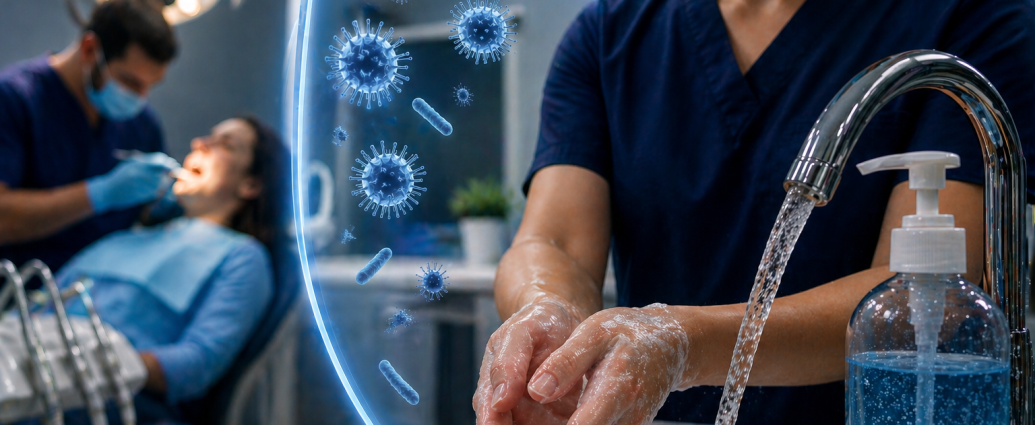
In dentistry, infection prevention is not optional. Every procedure, from a routine cleaning to oral surgery, exposes dental professionals and patients to microorganisms that can spread quickly in a clinical environment. While PPE like gloves, masks, and protective eyewear are essential, there is one habit that remains the most effective first step in reducing contamination risks: hand hygiene.
Hand hygiene is not just about washing hands after seeing a patient. It is a clinical safety practice that directly impacts cross-contamination control, compliance with infection prevention standards, and patient trust. For dental clinics, it is the first line of defense before any instrument is touched or any glove is worn.
Why Hand Hygiene Matters in Dental Practice
Dental professionals operate in one of the highest-contact healthcare environments. Dental clinicians regularly come into contact with saliva, blood, aerosols, contaminated surfaces, and sharp instruments. These factors increase the likelihood of exposure to bacteria and viruses.
According to the Centers for Disease Control and Prevention (CDC), proper hand hygiene is one of the most effective ways to prevent healthcare-associated infections. The CDC emphasizes that hand hygiene reduces the transmission of pathogens between healthcare workers, patients, and clinical environments. This applies directly to dentistry.
You can read the CDC’s official guidance here: CDC Hand Hygiene in Healthcare Settings
In a dental setting, even a small lapse in hand hygiene can lead to contamination of instruments, transfer of pathogens onto surfaces, and increased infection risk for both staff and patients.
How Germs Spread in Dental Clinics
A dental clinic has multiple transmission pathways. Germs can spread through:
- Contact with mucous membranes (mouth and nose)
- Saliva-contaminated aerosols produced by dental equipment
- Touching surfaces such as chair handles, trays, and dental lights
- Improper glove use or glove removal
- Handling contaminated instruments
Even when gloves are worn, hands can still become contaminated through micro-tears or incorrect glove removal. That is why hand hygiene is required both before and after wearing gloves, as emphasized in infection control protocols.
The CDC provides detailed recommendations on dental infection control practices here:
CDC Guidelines for Infection Control in Dental Health-Care Settings
Handwashing vs Alcohol-Based Hand Rubs: What’s Best?
Hand hygiene in dentistry involves two key approaches: handwashing with soap and water, and alcohol-based hand rubs.
When to Use Soap and Water
Soap and water should be used when hands are visibly dirty, contaminated with blood or bodily fluids, or after using the restroom. The mechanical action of washing physically removes germs and debris.
The CDC outlines proper handwashing technique here:
CDC: When and How to Wash Your Hands
When to Use Alcohol-Based Hand Sanitizer
In most clinical dental situations, alcohol-based hand rubs are recommended when hands are not visibly soiled. They are faster and highly effective at killing many harmful microorganisms.
The World Health Organization (WHO) supports alcohol-based hand rubs as a key tool in healthcare settings and provides extensive guidance on their use.
Read WHO guidance here: WHO Guidelines on Hand Hygiene in Health Care
In a busy dental clinic, alcohol-based rubs improve compliance because they reduce time and allow faster workflow without compromising safety.
The “5 Moments” of Hand Hygiene in Dentistry
Dental clinicians should treat hand hygiene as part of clinical timing, not an afterthought. The WHO developed the widely accepted “5 Moments for Hand Hygiene,” which applies strongly in dentistry:
- Before touching a patient
- Before a clean or aseptic procedure
- After exposure to bodily fluids
- After touching a patient
- After touching patient surroundings
This framework ensures that hand hygiene is performed at the most critical infection-risk points.
More information on the WHO “5 Moments” can be found here:
WHO: 5 Moments for Hand Hygiene
How Hand Hygiene Protects Patients and Dental Teams
Hand hygiene is not only about protecting the patient in the chair. It also protects the dental team.
Dental professionals are repeatedly exposed to infectious diseases including influenza, hepatitis viruses, respiratory infections, and other transmissible pathogens. Poor hand hygiene can increase occupational exposure risk and contribute to staff illness outbreaks.
Consistent hand hygiene:
- Reduces patient-to-patient cross-contamination
- Prevents contamination of sterilized tools or clean surfaces
- Protects immunocompromised and high-risk patients
- Reduces risk of occupational illness for clinicians
In fact, infection prevention programs across healthcare consistently identify hand hygiene as the most cost-effective method of reducing infection transmission.
Common Barriers to Hand Hygiene Compliance
Even though hand hygiene is simple, compliance is not always perfect. Some common barriers in dentistry include:
- Busy appointment schedules and time pressure
- Skin irritation from frequent washing
- Poor placement of sinks or sanitizing stations
- False confidence due to glove use
A strong infection prevention culture ensures that hand hygiene stations are accessible, staff are trained regularly, and products are selected to reduce skin dryness.
For clinics seeking regulatory guidance, OSHA provides information on infection prevention responsibilities and workplace exposure controls:
OSHA Bloodborne Pathogens and Needlestick Prevention
Hand Hygiene and Patient Trust
Today’s patients are more informed and more cautious about infection risks than ever before. Patients notice whether clinicians sanitize hands, change gloves properly, and maintain a clean clinical environment.
When a dentist practices visible and consistent hand hygiene, it reassures patients that the practice prioritizes safety and professionalism. It also strengthens the reputation of the clinic.
Beyond the Sink, Into Safer Dentistry
Hand hygiene is more than a routine habit. It is a foundational part of infection control and a daily act of patient protection. In dentistry, where exposure to bodily fluids and aerosols is constant, clean hands remain the most reliable first defense.
By adopting strict hand hygiene practices, dental professionals protect their patients, their teams, and their practice reputation. Beyond the sink lies a safer dental environment built on discipline, consistency, and clinical responsibility.