
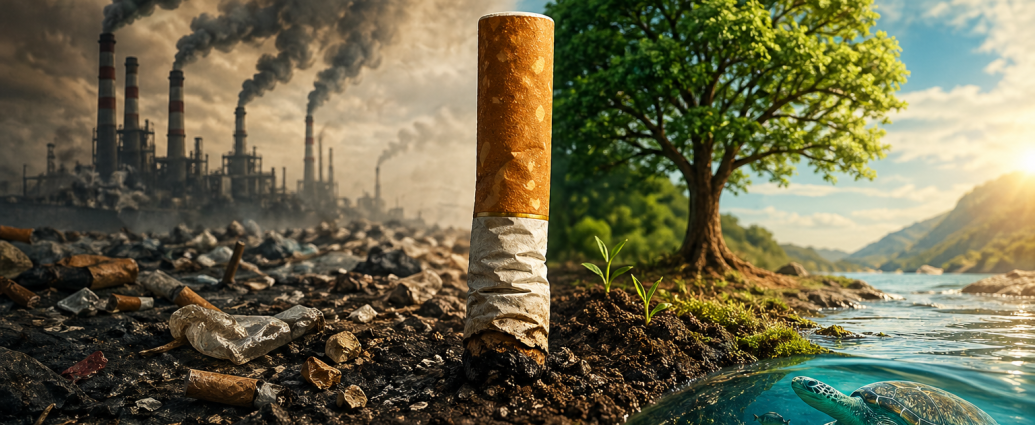
A Crisis Hidden in Plain Sight
When tobacco is discussed, the focus is usually on lung disease, cancer, and addiction. Yet beneath this well known public health crisis lies another emergency that receives far less attention: environmental destruction. The environmental impact of tobacco spans deforestation, water depletion, toxic waste, and global plastic pollution.
According to the World Health Organization, tobacco is responsible for a full life cycle of environmental harm, from cultivation to post consumption waste, making it one of the most environmentally damaging legal industries in the world (WHO FCTC).
This is not just a health issue. It is a planetary one.
Tobacco Farming and Deforestation: Cutting Down More Than Trees
The environmental footprint of tobacco begins in agricultural fields. Tobacco farming requires vast amounts of land, often in low and middle income countries where agricultural land is already under pressure.
Forests are cleared to create space for tobacco plantations, contributing significantly to deforestation and biodiversity loss. The WHO estimates that approximately one tree is lost for every 300 cigarettes produced due to curing and fuel use in processing (WHO EMRO).
This deforestation does more than remove trees. It:
- Reduces carbon absorption capacity
- Disrupts wildlife habitats
- Accelerates soil erosion
- Weakens local climate stability
In many regions, land used for tobacco could otherwise support food crops, worsening food insecurity and land degradation.
Water Use and Carbon Emissions: A Resource Intensive Industry
Tobacco is not just land hungry, it is also resource intensive. From irrigation to curing leaves and manufacturing cigarettes, the industry consumes enormous amounts of water and energy.
A report by the WHO highlights that tobacco production contributes significantly to global greenhouse gas emissions, with its carbon footprint comparable to major industrial sectors such as aviation (WHO News).
Key environmental pressures include:
- Intensive water usage for cultivation
- Energy consumption during curing and processing
- Emissions from global transportation networks
These factors combine to make tobacco a surprisingly large contributor to climate change.
Cigarette Butts: The Most Littered Plastic Waste on Earth
One of the most visible environmental impacts of tobacco is cigarette butt pollution. Cigarette filters are made of cellulose acetate, a type of plastic that can take years to break down and instead fragments into microplastics.
An estimated 4.5 trillion cigarette butts are discarded globally every year, making them the most littered item on the planet (WHO News).
These discarded filters:
- Release toxic chemicals such as nicotine, arsenic, and heavy metals
- Pollute rivers, beaches, and soil
- Are ingested by wildlife
- Break down into microplastics that enter food chains
Studies have shown that even a single cigarette butt can be toxic to aquatic organisms, highlighting the severity of this pollution.
Toxic Chemical Leakage: Invisible but Dangerous Pollution
Cigarette waste contains more than 7,000 chemicals, many of which are toxic to ecosystems and wildlife. When cigarette butts are discarded into the environment, rainfall and runoff carry these chemicals into water systems.
The WHO EMRO report on tobacco and the environment explains how these pollutants affect ecosystems at multiple levels, from soil microbes to fish populations (WHO EMRO).
Environmental effects include:
- Reduced soil fertility due to chemical contamination
- Harm to aquatic life and reproductive systems
- Bioaccumulation of toxins in food chains
This makes tobacco pollution not just visible litter, but a persistent chemical hazard.
Plastic Pollution and Microplastics: A Growing Global Threat
Cigarette filters are among the most widespread sources of plastic pollution globally. Unlike natural materials, they do not fully biodegrade. Instead, they fragment into microplastics that persist in soil and water systems for decades.
The WHO has called for stronger action against cigarette filter pollution, including considering regulatory measures to reduce or eliminate single use plastic filters (WHO Tobacco and Environment).
These microplastics:
- Enter marine ecosystems
- Are consumed by fish and marine organisms
- Eventually make their way into human food chains
This creates a long term environmental and health risk that extends far beyond smoking itself.
Tobacco and Electronic Waste: A New Emerging Problem
Modern tobacco products such as e cigarettes and heated tobacco devices are introducing a new layer of environmental harm. These devices contain:
- Lithium batteries
- Plastic cartridges
- Electronic components
When improperly discarded, they contribute to the growing global electronic waste crisis. Unlike cigarette butts, these items require specialized recycling systems that are often unavailable, especially in low income regions.
Economic and Environmental Costs of Cleanup
Governments worldwide spend billions of dollars annually cleaning up cigarette litter and managing environmental damage caused by tobacco waste. These costs are rarely borne by tobacco manufacturers, instead falling on taxpayers and local authorities.
This creates an unfair economic burden where:
- Public funds are used for cleanup
- Ecosystems continue to degrade
- Pollution persists despite repeated intervention
Why Tobacco Pollution is a Public Health Issue
The environmental impact of tobacco is directly linked to public health. Polluted water, contaminated soil, plastic exposure, and toxic air all feed back into human health systems.
The WHO emphasizes that tobacco is not only killing people through smoking but also harming the planet that sustains life itself (WHO News).
This makes tobacco a dual crisis: one of health and one of environmental sustainability.
Toward a Cleaner and Healthier Future
Addressing tobacco’s environmental impact requires coordinated global action:
- Strong enforcement of environmental regulations on tobacco waste
- Redesign or banning of plastic cigarette filters
- Extended producer responsibility laws for cleanup costs
- Public awareness campaigns linking tobacco and environmental harm
- Support for farmers transitioning from tobacco to sustainable crops
Some environmental experts also recommend classifying cigarette filters as plastic waste under global environmental law to reduce pollution at the source.
A Crisis Beneath Our Feet
The environmental impact of tobacco is a silent but growing crisis that affects ecosystems, climate systems, and human health simultaneously. From deforestation and water depletion to plastic pollution and toxic waste, tobacco leaves a footprint that extends far beyond the smoker.
Recognizing tobacco as an environmental threat is essential for meaningful global action. This is not just about quitting smoking. It is about protecting forests, oceans, soil, and future generations.
The crisis beneath our feet is real. And it is time we addressed it.
Further Reading
- WHO Tobacco and Environment Overview: https://www.who.int/news/item/31-05-2022-who-raises-alarm-on-tobacco-industry-environmental-impact
- WHO FCTC Environmental Impacts: https://fctc.who.int/
- National Geographic on cigarette pollution: https://www.nationalgeographic.com/environment/article/cigarettes-story-of-plastic
- WHO EMRO Environmental Health and Tobacco: https://www.emro.who.int/tfi-campaigns/2017/how-does-tobacco-impact-the-environment.html